The Premise
Design education
for a post-AI
world.
The current standard model of design education — which aims at students becoming competent designers in their chosen specialization — has been fundamentally challenged by AI tools that can now produce professional design solutions on demand. A student who graduates having learned only how to execute will graduate into a world where execution is cheap. This program starts from that reality rather than ignoring it.
The program addresses the problem of serious shortage of Design Educators who can lead design programs in design schools across the country. It is aimed at those for whom teaching is a vocation, and not a job. It is for those who actually enjoy being with young people and watch them flower.
Teaching design is different from teaching other disciplines where only knowledge has to be transferred. One cannot teach design by transferring one's knowledge to the students' minds nor by showing examples of what should be done. One has to learn to create a great learning environment where students learn without the teacher teaching.
The carefully curated curriculum will give inputs on Design Pedagogy and History of Design; talk about great design teachers and how they taught; Understanding the essentials for post-AI design learning; and specific inputs for organising learning for various specializations; because product design needs a different approach from typography, and working systematically and objectively works better when one can also be spontaneous and subjective.
The participants will be expected to design their own learning programs. By the end of the year, all will have learnt how to be a great teacher without actually teaching.
One year at
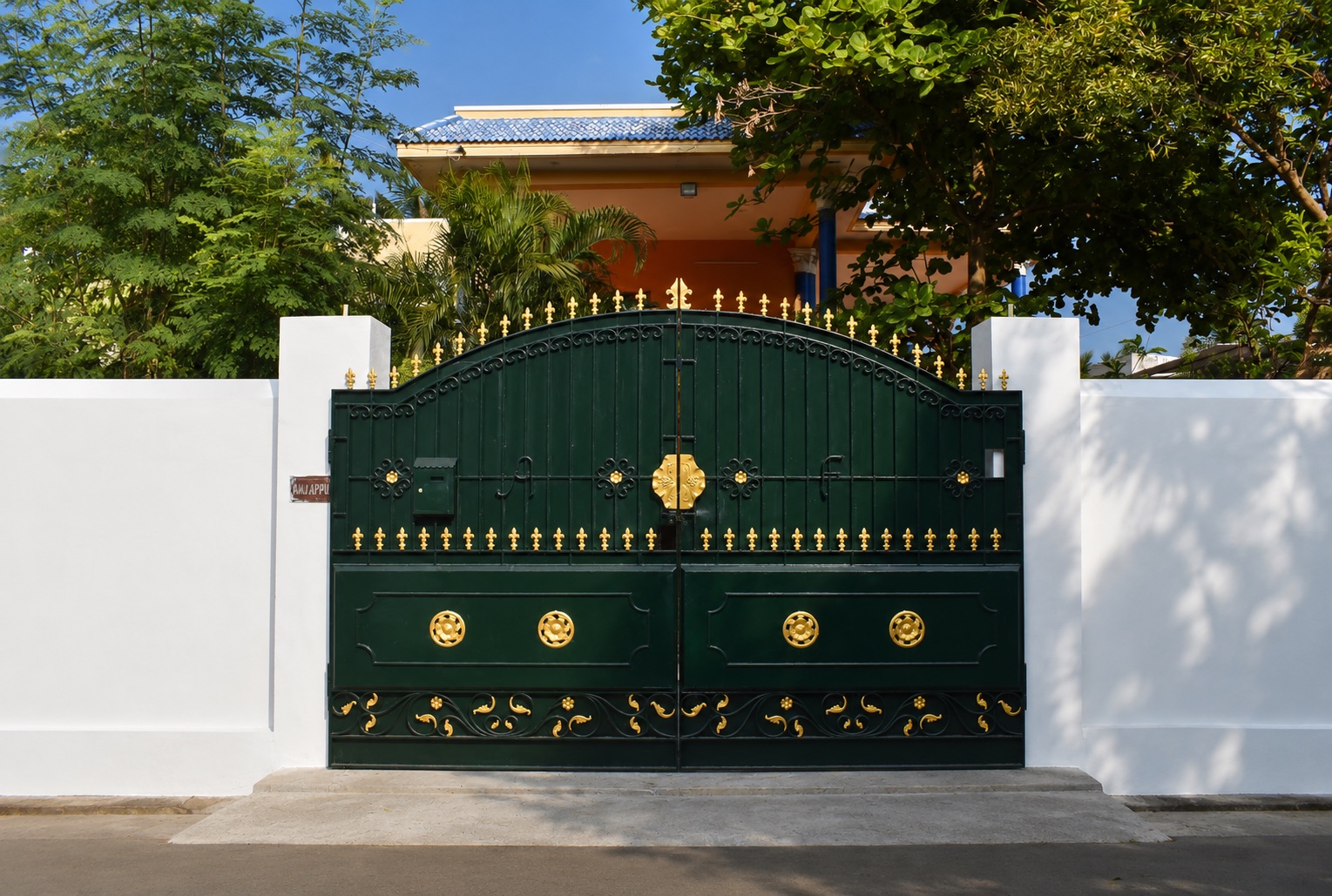
Villa Appavou
The program takes place entirely at Villa Appavou — SAKS's home in Puducherry, a five-minute walk from the Sri Aurobindo Ashram. Students are here for a full year, not a semester abroad. The expectation is immersion — in the work, in the place, and in the creative community that Puducherry sustains.
Visiting faculty stay in the campus guest house. Students arrange their own accommodation in Puducherry — guidance will be provided on acceptance, with a range of options near the campus and in the Ashram neighbourhood.
About Puducherry
Puducherry is not an incidental choice. The Sri Aurobindo Ashram and Auroville have made it a centre for contemplative creative practice for decades — a place where artists, musicians, dancers, and researchers come to work without the pressure of a metropolitan art market. For a program explicitly about depth of thought and the development of a creative voice, that context matters.
Explore Puducherry →
Address
Villa Appavou, 143/1 Periyar Nagar Main Road, Manaveli, Ariankuppam, Puducherry 605007
Nearest airport
Chennai International (MAA) — approximately 160km. Regular taxis and buses to Puducherry.
Nearby
Sri Aurobindo Ashram · Auroville / Matri Mandir · yoga, dance, music, craft practice · French Quarter